

The Historic Districts Council (HDC) reviews every public proposal affecting New York City’s landmarks and historic districts and provides testimony to the Landmarks Preservation Commission (LPC) whenever it is needed.
Please continue reading for our testimony regarding the latest items under consideration by the Commission. We invite you to visit the HDC@LPC blog for an archive containing all of our past testimony.
PLEASE NOTE: In an effort to curb the spread of COVID-19, the Landmarks Preservation Commission (LPC) is adjusting its processes and procedures to ensure the agency continues to provide services to the city while protecting the health of its employees and the general public. The agency is currently holding public hearings and meetings through Zoom, and live-streaming them through its YouTube channel. This enables applicants to present their projects to the Commission and the public to watch the presentations live on YouTube. Interested members of the public will also be able to provide live testimony by joining in through the Zoom app or by calling from any telephone. For information regarding online public participation, visit the LPC’s website here.
Item 1
373 Manor Road – Douglaston Historic District
CERTIFICATE OF APPROPRIATENESS, Docket #1938718
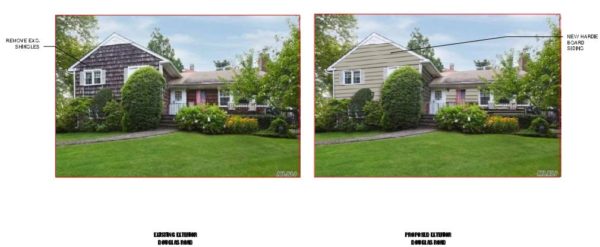
A freestanding ranch house built in 1960. Application is to alter the facades, and relocate the driveway and curb cut.
Architect: None listed
This house is attempting to adopt the classical vocabulary of older homes in the Douglaston Historic District. In doing so, HDC welcomes the removal of the faux shutters from the Manor Road elevation, but we were puzzled as to why the shutters remain on the Douglas Road elevation. The proposed Hardie board siding is inoffensive, but from a durability point of view, the existing cedar shakes will outperform the replacement material. Finally, we were unconvinced by the proposed portico. The sheer nature of a portico and any classical feature signifies symmetry, which this house lacks because it was designed to be assymetrical. For this reason, a door and a window appear awkward tucked beneath a pillared portico, and HDC suggests exploring an overhang in a style germane to the mid-century appearance of this house, such as a simple cantilever.

LPC determination: Approved with modifications.
Commissioners Fred Bland and Jean Lutfy agreed with HDC’s testimony regarding the portico and the applicant will work with LPC staff to simplify the design to be more in character with the building’s ranch style.
Item 2
245 Arleigh Road – Douglaston Historic District
CERTIFICATE OF APPROPRIATENESS, Docket #1935502
A Colonial Revival style house designed by John C.W. Cadoo and built in 1926. Application is to alter the facades, construct an addition, and widen the driveway.
Architect: Chien Han Architects
Prior to stating our comments, HDC echoes the concern of our community partners at the Douglaston and Little Neck Historical Society regarding the Stop Work Order that currently exists on this property. We ask that the proposed work in this application be conducted in compliance with the law, including the replacement of historic elements that were illegally removed.
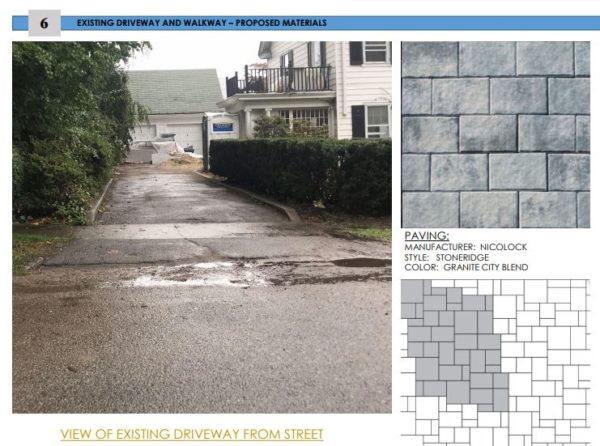
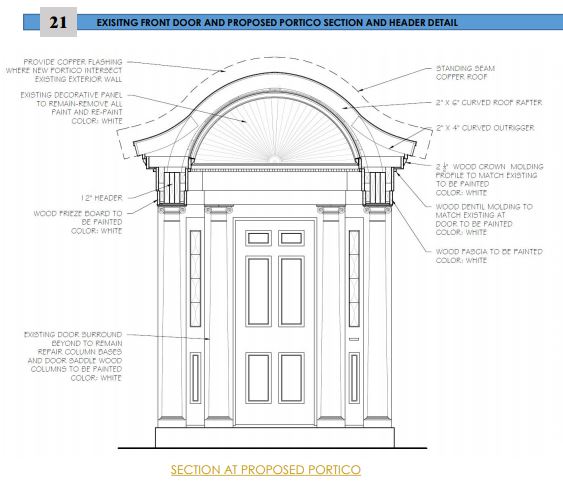
HDC objects to the proposed driveway paving, which is a deviation from the materials palette of this historic district. Its contemporary appearance clashes with the refined design and age of the house. HDC does not find Hardie siding appropriate, as the house’s clapboard is extant and it should be restored. The appearance of the faux siding will be particularly noticeable at the entry because the enframement, portico and columns are composed of wood. This proximity of a natural material next to substitute siding will not be elegant, and the house should be completely clad in wood.

LPC determination: Approved with modifications.
The applicant will work with staff on the proportions of the portico the width of the driveway and the size of the driveway’s pavers.
Item 7
538 East 11th Street – Free Public Baths of the City of New York, East 11th Street Bath – Individual Landmark
CERTIFICATE OF APPROPRIATENESS, Docket #2009935
A neo-Italian Renaissance style building designed by Arnold W. Brunner and built in 1904-05. Application is to alter the façade.
Architect: Murdock Solon Architects
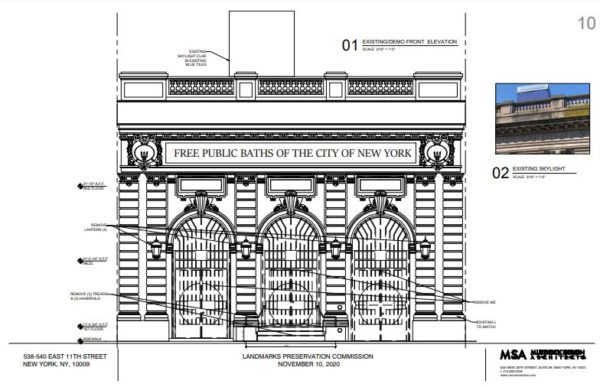
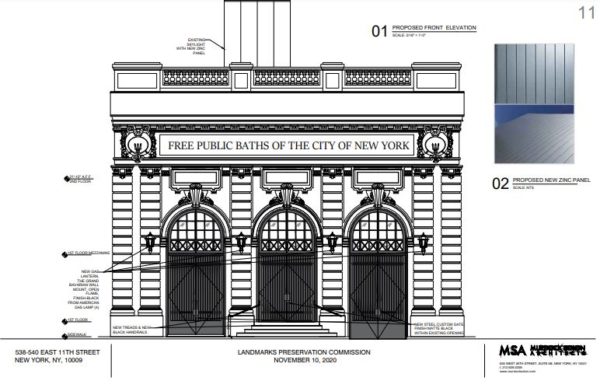
While HDC supports this application, we question the design choice of gas lantern light fixtures for this building. While gas remained popular in residential buildings of this era, we would like to see evidence or hear the rationale in choosing a gas flame to illuminate the facade of this former public building. The designation report is inconclusive on whether they were original design features or even when they actually were placed on the façade, so we are interested to hear the Commissioners’ discussion of their possible appropriateness.
LPC determination: No Action
Chair Carroll took no action, as most commissioners felt that the proposed gates did not provide the depth and profile and/or solid to void proportions consistent with the style of this building.
Item 9
456 West 23rd Street – Chelsea Historic District Extension
CERTIFICATE OF APPROPRIATENESS, Docket #2101296
An Italianate style rowhouse built in 1857. Application is to replace windows.
Architect: None listed
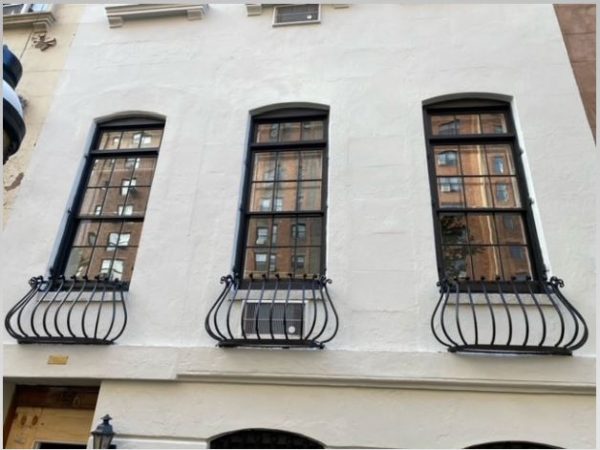
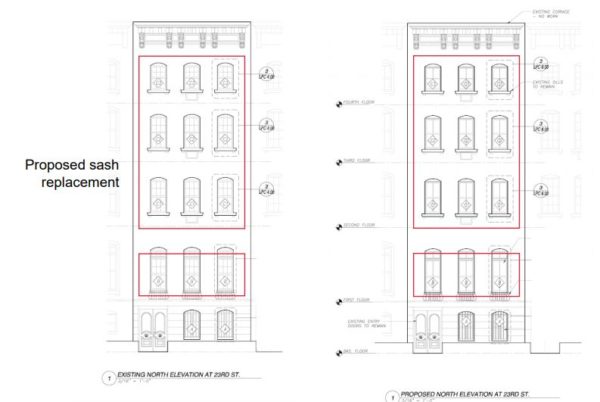
The careful Italianate proportions of this façade became compromised when the sills of the parlor floor were raised. The fenestration was designed to attenuate as it moves upward on the facade, thus, the longest windows belong at the bottom. HDC asks that the parlor floor sills be dropped back down to their original locations, and divide these windows into thirds as they were originally.
Close examination of the tax photo revealed that the historic windows had segmentally cut glazing set within square sash, and we ask that this condition be restored. This building is a part of a row of nine other buildings built identically in 1857. Each building varies in its architectural integrity, which is why it is important to move this house toward its original splendor, which in turn will move the row in the correct direction as well.

LPC determination: Approved.
The Commissioners agreed that in a “perfect world” the original dimensions and shape of the windows would be restored, but acknowledged that overall this proposal represents an incremental improvement. Commissioner Devonshire concluded by adding that “Another way I’m able to justify this is, it captures a moment in history when a slimebag developer bought it and put in these square windows.”
Item 10
1 West 67th Street (Hôtel des Artistes) – Upper West Side/Central Park West Historic District
CERTIFICATE OF APPROPRIATENESS, Docket #2102245
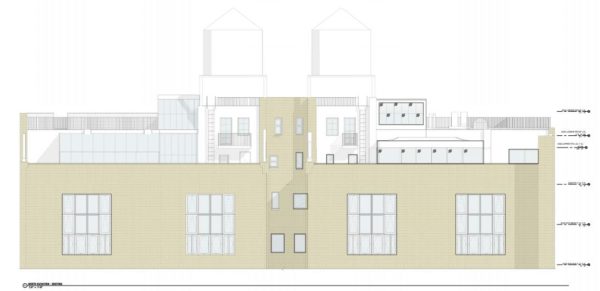
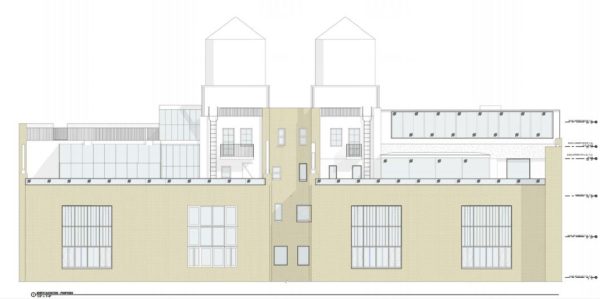
A neo-Gothic style studio building with Tudor style elements designed by George M. Pollard built in 1915-18. Application is to modify the parapet, replace a skylight, and replace windows.
Architect: Christoff : Finio Architecture
HDC found the glass railings proposed atop the parapets to be inappropriate. Rarely invisible, these railings will catch light and be reflective, and therefore call attention to the changes being made in this location. Perhaps a more traditional pipe railing would better serve a building of this vintage.
LPC determination: Approved.
No commissioners had any issue with any aspect of the project. The glass railing is for the visibility of the park, as the client is wheelchair bound and therefore at eye level with the railing.
Item 12
61 East 77th Street – Upper East Side Historic District
CERTIFICATE OF APPROPRIATENESS, Docket #2010899
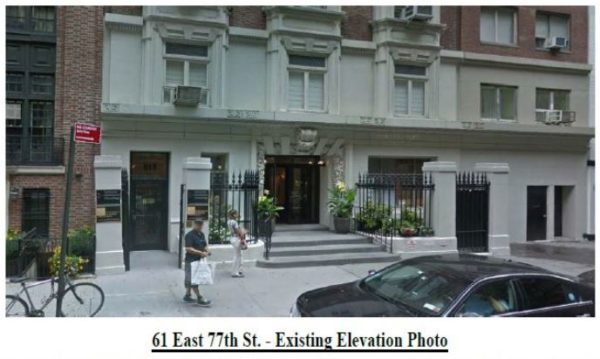
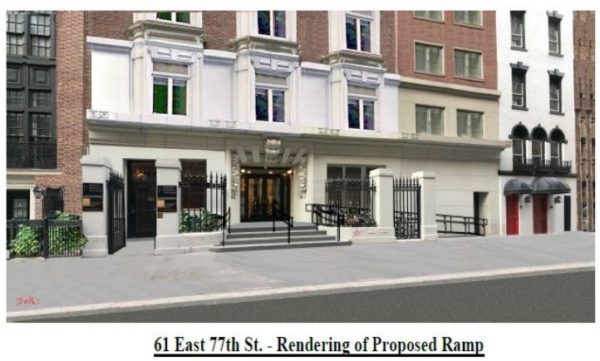
A neo-Federal style school building with Beaux-Art style features designed by Harde and Hasselman built in 1916. Application is to reconstruct the stoop and construct a barrier-free access ramp.
Architect: Christopher Stone Architect
HDC found this proposal to be sensitively executed, but we ask the Commission to examine the details of the proposed ironwork, which appears slightly heavy. The new ironwork should read as secondary to the landmark’s existing, decorative ironwork.
LPC determination: Approved with modifications.
Commissioners agreed with HDCs testimony that the design of the ramp, particularly its railings, should be simplified and thinner.