

LPC-26-06474
102 Kent Street – Greenpoint Historic District
CERTIFICATE OF APPROPRIATENESS
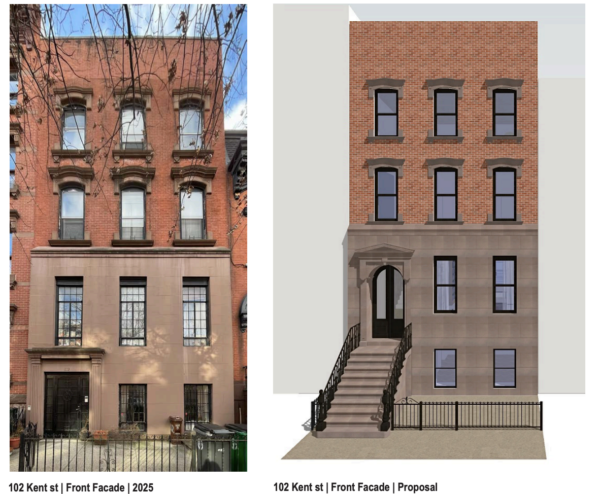
An altered neo-Grec style rowhouse designed by George A. Kingsland and built c. 1873. Application is to reconstruct a stoop and parlor entrance.
Architect: thread collective
The Historic Districts Council supports the restoration of the stoop and the return of the entrance to the parlor floor, which would help reestablish the building’s historic configuration.
The committee did question the accuracy of the application’s drawings, noting inconsistencies with photographs of the building—especially the window proportions and the hierarchy between the garden and parlor levels. We ask LPC to ensure the drawings accurately represent the building’s existing conditions before any design decisions are approved.
LPC-26-05099
183 Columbia Heights – Brooklyn Heights Historic District
CERTIFICATE OF APPROPRIATENESS
A Beaux-Arts style apartment house built c. 1920. Application is to establish a master plan governing the future installation of windows.
The Historic Districts Council is encouraged to see a comprehensive window master plan proposed for this building. Establishing a consistent long-term approach to window replacement is an important preservation tool.
However, we encourage the applicant to ensure that the configuration of the proposed windows is firmly grounded in historic precedent. In particular, the ground-floor openings historically appear to have included transoms, which contribute to the architectural character of the façade. We recommend restoring these transoms where feasible to better reflect the building’s historic appearance.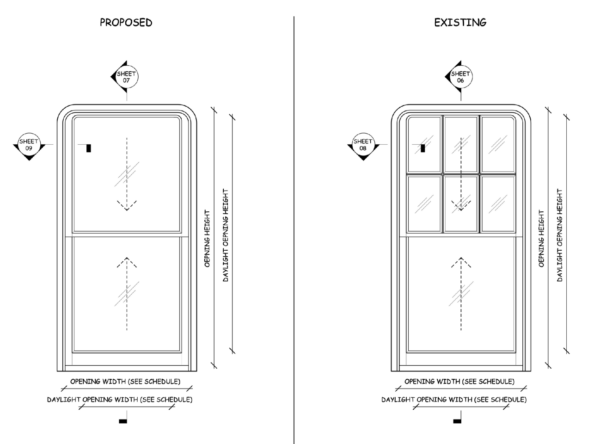
LPC-25-12245
Wyckoff-Bennett Homestead – Individual Landmark
CERTIFICATE OF APPROPRIATENESS
An early Dutch colonial farmhouse originally built in the 18th century. Application is to install porch railings, a curb cut, and a driveway.
The Historic Districts Council is encouraged to see renewed investment in the Wyckoff-Bennett Homestead, a rare and significant historic resource that has faced years of neglect and uncertainty. Efforts to return the house to active use are welcome.
That said, a few aspects of the proposal raise concerns. The addition of heavy porch railings would introduce a major visual change to a façade that historically did not feature them. Given that the porch height appears to exceed code requirements by only a very small margin, we encourage the applicant to explore grading adjustments or other alternatives that might eliminate the need for railings entirely. If railings prove unavoidable, they should be designed to be as minimal and visually unobtrusive as possible.
We are also concerned about the scale of the proposed driveway and paved area. The proposal appears to introduce a substantial expanse of hardscape that reads more as a parking lot than a modest driveway. If grass-crete or similar paving systems are used, they should be properly planted and minimized in extent so that the rural character of this extraordinary site is preserved.

LPC-26-01550
22 East 10th Street – Greenwich Village Historic District
CERTIFICATE OF APPROPRIATENESS
A rowhouse built in 1844. Application is to alter the façade and construct rooftop and rear yard additions.
Architect: Workshop DA
The Historic Districts Council supports the restoration work proposed for the front façade. However, we are concerned that the proposed rear yard addition is excessive in height.
An earlier design for this project proposed a lower extension that stopped short of the upper floors and better respected the historic massing of the building. The current proposal extends too far upward, adding unnecessary bulk to the rear of the structure.
We encourage the applicant to revisit the earlier scheme or otherwise reduce the height of the addition so that it remains clearly subordinate to the historic building.

LPC-26-06937
69 Gansevoort Street – Gansevoort Market Historic District
CERTIFICATE OF APPROPRIATENESS
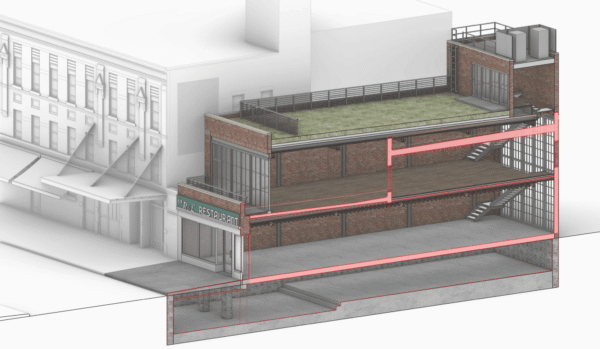
A modern style building originally constructed in the early twentieth century and later altered. Application is to alter the storefront and construct a rooftop addition.
Architect: David Bucovy
The Historic Districts Council finds the proposed rooftop addition problematic. Compared with an earlier approved proposal, the new addition is pushed significantly closer to the front façade and is substantially more visible.
By bringing the addition forward, the design risks overwhelming the historic one-story base and diminishing the visual prominence of the ground floor, which should remain the dominant architectural feature.
We recommend that the addition be set back further on the roof, similar to the previously approved design, so that it remains subordinate to the historic façade.
LPC-26-06706
27 East 4th Street – NoHo Historic District
CERTIFICATE OF APPROPRIATENESS
Application is to demolish the existing building and construct a new building adjacent to the Merchant’s House Museum.
Architect: DXA Studio
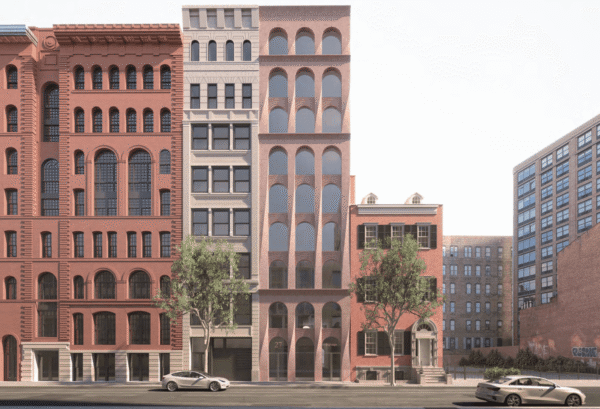
The Historic Districts Council finds the proposed new design inappropriate for this sensitive site.
The façade composition, with its exaggerated arches and highly expressive detailing, is visually busy and calls undue attention to itself. The design also appears to closely reference the façade of the De Vinne Press Building two doors down. While contextual design can be appropriate in historic districts, we do not believe that a new building should too closely replicate specific historic buildings nearby. This approach risks creating an overly imitative effect that could diminish the authenticity of both the new construction and the surrounding historic fabric. A building in this location should defer to the modest scale and quiet presence of the neighboring Merchant’s House rather than compete with it.
The previously approved design for this site was considerably more restrained and more appropriate to the historic district. Any new proposal should return to that more modest approach.
In addition, in agreement with our preservation colleagues, we remain concerned about the potential structural impacts of new construction on the Merchant’s House. Recent construction projects throughout the city have demonstrated how easily adjacent historic buildings can be destabilized. Given the extraordinary significance and fragility of the Merchant’s House, the Commission must ensure that all stabilization and monitoring requirements are strictly enforced and carefully scrutinized.