


The current plans to amend Section 106 of the National Historic Preservation Act would be devastating for both New York City and the country as a whole unless they are stopped. However, there may be some confusion about how these amendments impact New York City, which has uniquely robust preservation laws.
New York City interacts with Section 106 during specific development projects that require federal collaboration. Section 106 applies to any project that involves federal funding, permits, or approvals which may affect historic properties, thus automatically triggering the review. The State Historic Preservation Office (SHPO) leads the efforts to mitigate harm, in cooperation with designated local agencies like the Landmarks Preservation Commission (LPC) and Federally recognized tribal groups. Citywide and local groups like HDC are often invited as consulting parties or may request to be added as a consulting party if the project impacts their work. Many Section 106 Projects can be categorized in the following ways:
- Housing Projects
- Transportation & Infrastructure
- Resiliency & Waterfront Construction
The Section 106 Review Process applies to historic properties that are listed or eligible for listing on the National Register of Historic Property. Under 36 CFR § 800.16(l), a “historic property” includes properties eligible for listing — not just those formally designated. That means a building does not need to be on a register, and it does not need a plaque, for review to be required. Eligibility is often determined during the review itself.
According to New York’s State Historic Preservation Office (SHPO), the state reviewed over 25,000 federal consultations over the last six years, roughly 9,000 a year, with an average review time of just nine days. Public comment is typically sought only when an adverse effect is found, and in New York, that has been true in less than 1 percent of cases. That low number is not a sign Section 106 is unnecessary; it is proof the process resolves conflicts and avoids harm before projects are delayed.
This is a brief list of different projects that have been required to go through the Section 106 review process in New York. It serves as an educational and advocacy resource for community groups to use as examples of Section 106 within the city while drafting opposition letters to the amendments.
This is not an exhaustive list and may be updated in light of new information.
Transportation & Infrastructure
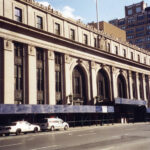 The Farley Building (now Moynihan Train Hall, 350 W 33rd St, New York, NY 10001): During its conversion to Moynihan Train Hall, the Farley Post Office Building went through Section 106 Review as the United States Postal Service and the Federal Railroad Administration were both involved in transferring, redeveloping and funding portions of the project since 2007. Preservation groups fought to prevent the initial plan to relocate Madison Square Garden behind the Farley Post Office, and introduce public art to the station. The consultation led to legally binding agreements focused on preserving architectural features such as the massive Corinthian columns, grand interior lobby, and historic plaster and stone details, alongside new rail and office infrastructure.
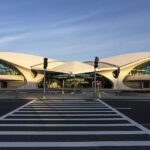 TWA Terminal (John F. Kennedy International Airport): During JetBlue’s Redevelopment Plan for Terminal 5/6 at JFK Airport, the Port Authority proposed to demolish the historic Trans World Airline (TWA) Terminal due to obsolescence. Preservation groups argued against changing the historic building without a Section 106 review, as the building was historically significant. The review process had thirteen consulting parties to explore alternatives to a full-fledged demolition. These groups provided expertise that informed the agency’s decision before the design was finalized, thereby preventing the loss of a one-of-a-kind landmark.
 World Trade Center Site: The World Trade Center rebuilding was a unique case during which Section 106 was already underway in 2004. Construction crews found an 18th Century ship hull in 2010, which SHPO determined to be eligible for listing on the National Register. Construction efforts were diverted to avoid damaging the ship, and it was carefully excavated for conservation. Similarly, the Vesey Street Stairway (also known as “Survivor’s Stairs” were preserved through Section 106 when they were recognized as historically significant. The slurry wall came under protection through the review process, and was sent to the 9/11 Memorial Museum in one piece.
Affordable Housing Projects
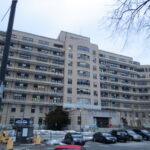 The T-Building (82-41 Parsons Boulevard, Queens NY): This affordable housing project sought to readapt a former 10-story tuberculosis hospital in Jamaica, Queens into an affordable housing project in 2022. The project sponsor sought federal financial assistance from the US Department of Housing and Development (HUD) through HPD, thus triggering Section 106. The property had been placed on the National Register of Historic Places since 2019, and historic tax credits were actively being used to restore the building. SHPO took the lead in ensuring that the re-adaptation of the building was in line with the Secretary of the Interior’s standards for preservation, and determined that the conversion into housing would have no adverse effects on the property.
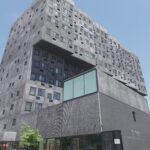 The Sugar Hill Affordable Housing Project (404-414 West 155th Street, New York, NY): This ambitious affordable housing project required HUD funding to construct a new proposed 13-story mixed-use building in 2010 that would contain approximately 124 units of affordable housing, a children’s museum, a daycare facility and early childhood learning center in the Sugar Hill Historic District (both local and State/National Register). While the project would demolish a non-contributing garage building, construction of the housing project could impact other sensitive historic properties, and Section 106 was needed to mitigate harm to the surrounding areas. The Proposed Project would result in indirect effects because its unique modern massing, façade materials and fenestration would differ from the historic row houses and apartment buildings prevalent in the District. The indirect effect would alter views from certain locations along West 155th Street, St. Nicholas Place and St. Nicholas Avenue in the vicinity of the project site. SHPO and HPD ensured that the project sponsor would undertake extensive documentation of the neighborhood and submit a Construction Protection Plan that would be approved by SHPO first. Since the construction was adjacent to a locally designated property, SHPO also enforced that the new construction would adhere to the same standard construction measures required for buildings designated as local landmarks.
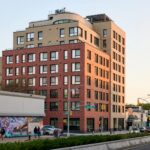 A Proposed Affordable Senior Housing Project (6309 4th Avenue, Brooklyn NY): This project took place in 2017 and required HUD assistance to facilitate new construction and adaptive re-use intended to provide affordable senior housing in the Sunset Park Historic District (State/National Register). It would demolish the former Zion Norwegian Lutheran Church and construct a new building that would incorporate adjacent historic townhouses to create senior housing units. Both plans would affect the larger historic district through demolition and construction damage, therefore SHPO and the LPC determined that the proposed project would constitute an adverse effect on historic properties under Section 106. The Section 106 consultation process would conclude following the execution of a Memorandum of Agreement (MOA) between HPD, SHPO, and the project sponsor which would contain agreed upon measures to extensively document the church, salvage pieces of the building that could be incorporated into new construction, and consult with SHPO on the re-adaptation of the townhouses. Execution of the MOA would be required prior to the release of funds and start of construction at the project site.
Climate Resiliency and Waterfront Construction
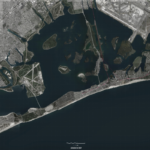 Rockaway/Jamaica Bay Resiliency Project: The Army Corps’ Rockaway/Jamaica Bay Resiliency Project in the wake of Hurricane Sandy specifically considered Section 106 in its documentation structure because the project covered multiple historic districts in or adjacent to the project. The National Park Service, Gateway National Recreation Area and several tribal groups were consulted to make sure that the recommended plans would not affect historic, archaeological and culturally significant resources. The related programmatic agreement for shoreline/groin/seawall work along the Rockaway peninsula was likewise built around Advisory Council on Historic Preservation (ACHP) regulations implementing Section 106 to mitigate any effects on historic properties, including areas where there were material remains of human activity.
While the public comment period to the Advisory Council For Historic Preservation has not been announced yet, community members can send letters of opposition to the Governor and their Senators. Those who need a template letter can find HDC’s draft letter template below.
Send a Letter to your Representative to oppose the changes to Section 106!