

PUBLIC HEARING TESTIMONY
LPC-25-11315
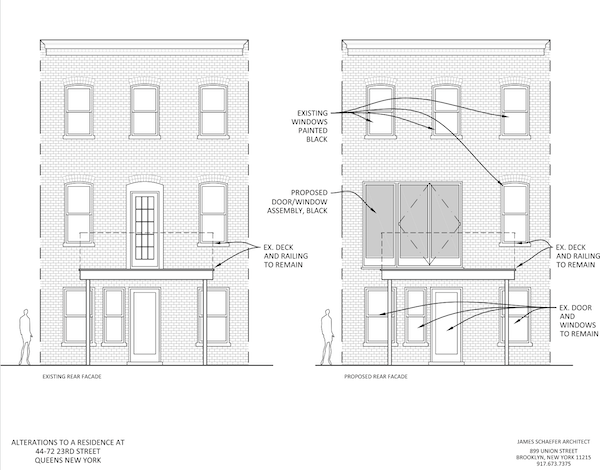
44-72 23rd Street – Hunters Point Historic District
CERTIFICATE OF APPROPRIATENESS
A modified Romanesque Revival style rowhouse with a Classical style cornice built in 1887. Application is to modify openings at the rear façade.
Architect: James Schaefer Architect
HDC finds this proposal inappropriate. This appears to be an intact row with regular sets of punched symmetrical openings. Normally, we are open to modifications at this level, but the configuration of the rear facade is asymmetrical, and the proposed window and door are completely disconnected from its own deck. Additionally, there is no elaboration on how the existing brick will be treated with the new openings.
Action: Unanimously approved with modification that applicant retain segmental arch over new opening.
LPC-25-03952
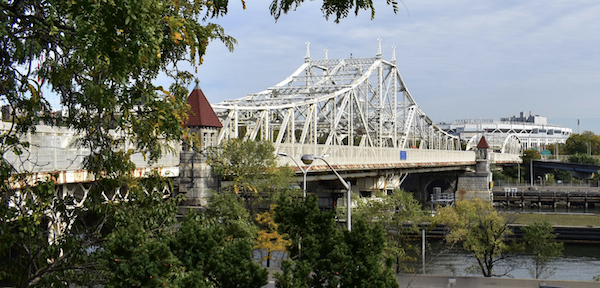
Macomb’s Dam Bridge – Macomb’s Dam Bridge (originally Central Bridge and 155th Street Viaduct) – Individual Landmark
BINDING REPORT
A Colonial Revival style house designed by Arlington D. Isham and built in 1901. Application is to construct a front porch and portico.
Architect: NYC DOT
HDC finds the proposal to repaint this individually landmarked bridge to be inappropriate. The current paint color was selected based on a paint analysis showing that the cream color was predominant for previous coats.
The rust has nothing to do with the color of the paint and everything to do with proper and continuous maintenance. We would like to see Macomb’s Dam Bridge remain its current color and be better maintained.
Action: No action.
LPC-25-04617
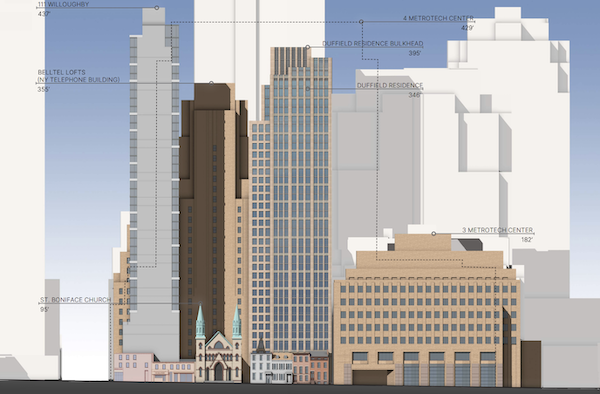
188 Duffield Street (aka 182-188 Duffield Street) – Duffield Street Houses – Individual Landmark
CERTIFICATE OF APPROPRIATENESS
A Greek Revival style rowhouse built c. 1839 (no. 182), a Greek Revival/vernacular style rowhouse built in 1847 (no. 184), a Greek Revival/Federal style rowhouse built c. 1835-38 (no. 186), and a Greek Revival style rowhouse built c. 1835-38 and altered in the Queen Anne/Second Empire style c. 1881-83 (no. 188), all moved to the current site and altered in 1990. Application is to combine the buildings, modify an entrance, partially reconstruct the roofs, interior walls and floors, and rear facades, and construct a new building at the rear of the site.
Architect: Hill West Architects; Acheson Doyle Partners Architects
HDC finds this proposal to be completely inappropriate, and we strongly oppose it.
We are most concerned with the individually designated landmark houses themselves. This proposal includes merging the interiors of the historic Duffield Street structures and demolishing their rear facades in order to turn the quartet of historic buildings into a lobby for the proposed tower. This is inappropriate in the extreme.
Additionally, we wonder how using wood-framed buildings as a lobby for a new approximately 100-unit building would meet code. The developer is proposing to alter the facade with the removal of the stoop of the far left side house and alter the doorway to make room for a residential entrance.
We find this removal of historic fabric and changing the scale of the main doorway to be inappropriate. We are concerned that the removal of historic material to come up to code with fireproof materials will result in façadism with modern infill.
We question how the wholesale demolition of the rear of these buildings is appropriate. We are concerned that this precedent would suggest that every historic structure is only as meaningful as its facade and thereby fair game to be window dressing for a tower.
We would like to reference the memorandum of agreement signed on March 25, 1988 by Mayor Edward I. Koch for the City of New York; Julia S. Stokes, New York State Historic Preservation Officer, and John F.W. Rogers, Chairman of the Advisory Council on Historic Preservation concerning mitigation for the Metrotech Urban Renewal Project in downtown Brooklyn.
Among other things, the mitigation included relocating four historic houses from within the project area to a vacant site just outside the project boundary, restoring the houses, and occupying them with compatible uses. Although not included in the memo of agreement, the final environmental impact statement required the houses to be protected from future alteration or disturbance by either local landmark designation or deed restrictions.
We do not believe this proposed plan is in any way aligned with the original agreement signed when the properties were moved.
It was a sad state that when these four historic buildings were moved, the community expected them to serve a compatible use and be a community asset. Instead, they have remained vacant and deteriorating, and are now proposed for gutting and partial demolition. The community deserves a plan that will fully restore these properties and return them to productive use in Downtown Brooklyn.
Action: No action.
LPC-26-01465
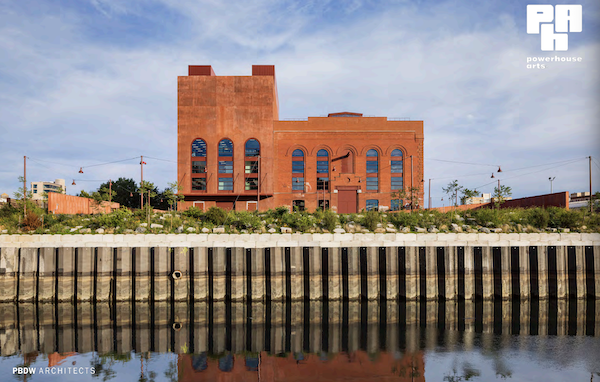
322 3rd Avenue (aka 153 2nd Street and 340 3rd Avenue) – Brooklyn Rapid Transit Company (BRT) Central Power Station Engine House – Individual Landmark
TRANSFER OF DEVELOPMENT RIGHTS
A Classical/Romanesque Revival style power station designed by Thomas E. Murray and built in 1901-04, and altered and combined with a new annex building designed by Herzon & de Meuron Architects and built in 2022. Application is to request that the Landmarks Preservation Commission issue a favorable report to the City Planning Commission regarding a continuing maintenance program for the landmark in connection with a transfer of development rights pursuant to Section 75-42 of the Zoning Resolution.
Architect: PBDW Architects
HDC supports air rights transfers as being able to help restore and maintain landmark buildings, as long as the maintenance plan is as comprehensive and restorative as possible. With the new City of Yes zoning changes, HDC is unsure exactly what we are able to review regarding this proposal. As more of these proposals come forward, we seek clarification and guidelines from the LPC on how our committee should be reviewing these proposals going forward.
Action: Unanimously approved for favorable report.
LPC-26-02129
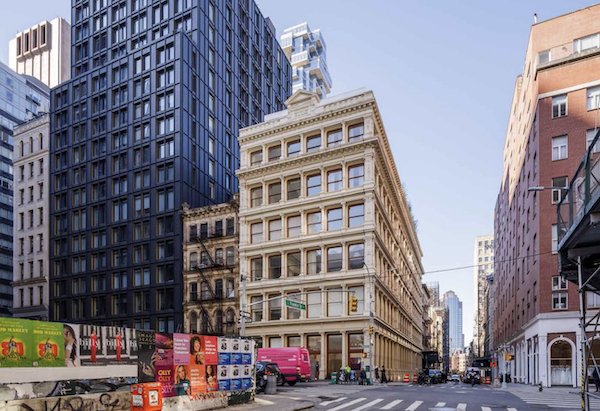
361 Broadway – James White Building – Individual Landmark
TRANSFER OF DEVELOPMENT RIGHTS
A Classical Revival style commercial building designed by W. Wheeler Smith and built in 1881-82. Application is to request that the Landmarks Preservation Commission issue a favorable report to the City Planning Commission regarding a continuing maintenance program for the landmark in connection with a transfer of development rights pursuant to Section 75-42 of the Zoning Resolution.
Architect: Higgins Quasebarth & Partners, LLC
HDC supports air rights transfers as being able to help restore and maintain landmark buildings, as long as the maintenance plan is as comprehensive and restorative as possible. With the new City of Yes zoning changes, HDC is unsure exactly what we are able to review regarding this proposal. As more of these proposals come forward, we seek clarification and guidelines from the LPC on how our committee should be reviewing these proposals going forward.
Action: Unanimously approved for favorable report.
LPC-26-02128
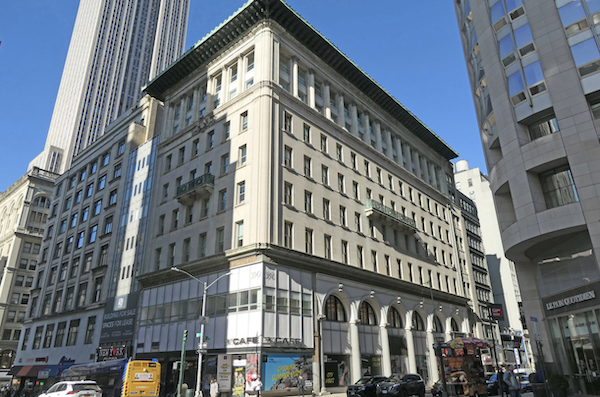
390 Fifth Avenue – Gorham Building – Individual Landmark
TRANSFER OF DEVELOPMENT RIGHTS
A Florentine Renaissance style office building designed by Stanford White of McKim, Mead & White and built in 1904-1906. Application is to request that the Landmarks Preservation Commission issue a favorable report to the City Planning Commission regarding a continuing maintenance program for the landmark in connection with a transfer of development rights pursuant to Section 75-422 of the Zoning Resolution.
Architect: Higgins Quasebarth & Partners, LLC
HDC supports air rights transfers as being able to help restore and maintain landmark buildings as long as the maintenance plan is as comprehensive and as restorative as possible, especially in the case of a jewelbox building like the Gorham Building.
Instead, the owner of this building is proposing to capitalize on air rights and maintain non-historic elements that detract from the significance of this structure. We believe the bar should be extremely high for these maintenance and restoration plans that bring a windfall to owners of historic buildings. That is not the case here, and we once again urge the owner of this building to recognize its incredible significance and the importance of restoring it to its original form.
Action: No action.
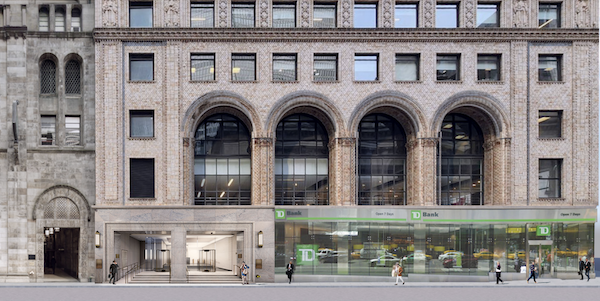
LPC-26-02755
125 Park Avenue – Pershing Square Building – Individual Landmark
CERTIFICATE OF APPROPRIATENESS
A Lombard Revival style office building designed by John Sloan in association with York & Sawyer and built in 1921-23. Application is to modify an entrance and install signage and lighting.
Architect: MdeAS
HDC finds this proposal to be inappropriate. The proposed intervention is unbalanced relative to the rest of the facade, and we believe that there is an opportunity to bring order and appropriateness back to the base of this building.
Between the existing and the proposed, we currently prefer the existing. There is a lack of alignment between the ground-floor bays and the arches on the floor above. It creates an asymmetry that is unpleasant. We also think that combining the two bays is creating visual confusion. We recommend that the applicant study the proportions and composition of the base of the building, as this proposal should be moving toward the original design of the building, not further away.
Action: Unanimously approved.